How to safely feed squirrels during the cold season: expert advice
Experts debunked myths about the diet of wild squirrels and explained which foods can harm furry park residents in winter.
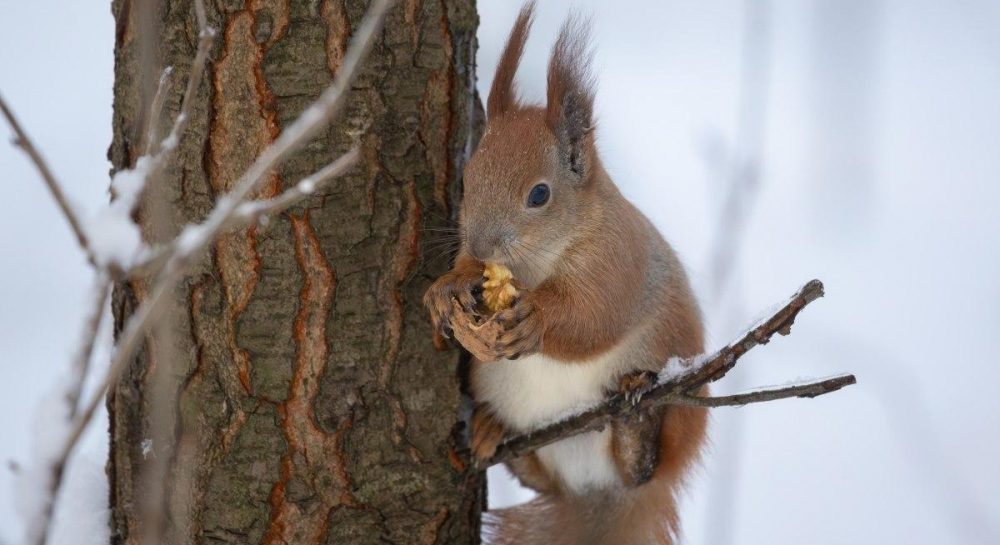 🏙️City
Photo: UNIAN
Key points
- The core winter diet of squirrels consists of nuts, seeds, and berries
- Store-bought mixes often contain harmful sugars, starch, and peanuts
- Bitter almonds are deadly toxic due to hydrocyanic acid content
- Winter freezes and February breeding require additional feeding assistance
Watching squirrels in urban parks and public gardens brings joy to residents, especially in winter when these lively rodents look for additional energy sources. However, the desire to treat the animals often leads to fatal mistakes, as human food is completely unsuitable for wildlife. Specialists from the Mein schoener Garten publication studied the natural diet of squirrels in detail to help citizens properly organize feeding during the cold months.
Natural diet and dangerous treats
In the wild, the basis of a squirrel's nutrition consists of foods rich in fats, minerals, and nutrients. They eagerly consume forest and walnuts, hazelnuts, pine nuts, as well as sunflower, pumpkin, spruce, and pine seeds. In addition, the diet is supplemented by fresh or dried berries such as rose hips and sea buckthorn, along with various fruits.
At the same time, experts warn against using ready-made store mixes, which often contain sugar, starch, corn, or peanuts that are harmful to animals. It is strictly forbidden to give squirrels raw bitter almonds because they contain hydrocyanic acid, which is poisonous to their bodies.
When and how to properly help animals in frosts
Squirrels do not accumulate fat reserves for the winter; instead, they bury seeds and nuts in the ground. When temperatures stay below zero for a long period and the ground freezes, finding food on their own becomes extremely difficult. Furthermore, the mating season begins in December, and the first offspring are born in February, significantly increasing the animals' energy requirements.
"If it is especially cold outside, it is recommended to feed them taking into account their natural needs", experts note. Independently formulated mixtures of quality seeds and nuts will help the local population successfully survive winter frosts and raise the next generation.
Source UNIAN — unian.ua/curiosities/chim-goduvati-bilku-vzimku-pravilniy-racion-za… ↗
Read next
 👥Society
Interactive Housing Map for IDPs: New Opportunities for Communities
Ukraine is developing an interactive digital map to help internally displaced persons find properties suitable for long-term housing.
 🛡️Security
Court upholds detention of woman posing as paramedic during clashes at National Guard facility
The Kyiv Court of Appeal has rejected the appeal of a suspect involved in blocking a National Guard unit and spreading disinformation.
 🛡️Security
Putin threatens 'inevitable response' to attacks on Russian oil refineries
Vladimir Putin has threatened retaliation following Ukrainian drone strikes on Russian fuel processing facilities.
 🛡️Security
Norway in Talks with Ukraine over Attacks on Russian Ships in the Baltic Sea
Norway is maintaining a dialogue with Ukraine regarding international law and regional stability following incidents involving Russian vessels in the Baltic region.
 🛡️Security
Uมิ Army Officer Suspected of Torturing Subordinates Extradited from Moldova
Senior Lieutenant Vladyslav Pastukh has been returned to Ukraine from Moldova to face charges of abusing servicemen.
 👥Society
Persimmon Season in Voznesensk: Health Benefits of the Autumn Fruit
The persimmon season has arrived in local markets, offering residents a rich source of vitamins, fiber, and energy to support health during autumn.